
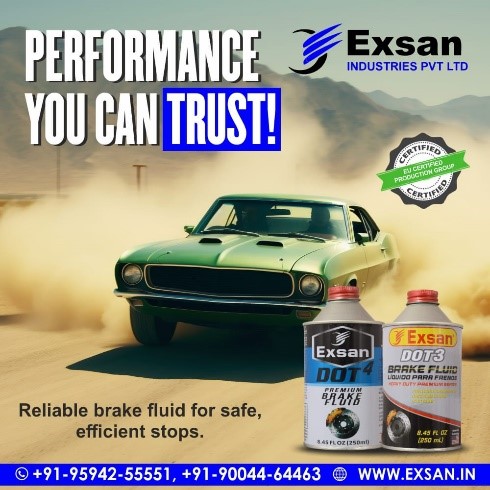
Brake fluid plays an invisible yet vital role in vehicle safety. Without it, your car’s braking system would be ineffective. However, not all brake fluids are created equal. The most common types—DOT 3 and DOT 4—differ in composition, boiling point, and usage. Understanding their differences can help you make the right maintenance decisions for your vehicle.
DOT 3 brake fluid is glycol-based with a dry boiling point of approximately 205°C. It is commonly used in standard vehicles that do not experience intense braking conditions. It’s affordable, widely available, and sufficient for typical daily commutes.
DOT 4 brake fluid is also glycol-based but contains additives that raise the boiling point to around 230°C (dry), making it more suitable for vehicles that encounter aggressive driving, heavy loads, or hilly terrains. However, it absorbs moisture faster and might require more frequent replacement.
Why is boiling point important? Under high temperatures, brake fluid can vaporize, leading to a dangerous condition called vapor lock, which reduces braking efficiency. Choosing the right fluid helps ensure your vehicle maintains optimal braking performance under all conditions.
Regular brake fluid inspection and replacement every 2-3 years—or sooner in high-performance vehicles—is a crucial safety step.
At Exsan Industries Pvt Ltd, we offer Exsan DOT 3 and DOT 4 Brake Fluids that meet international standards and ensure superior heat resistance and long-term reliability. Trusted by mechanics and automotive professionals, Exsan’s brake fluids are designed for consistent performance in diverse driving conditions.
To learn more or to inquire about bulk orders, visit https://exsan.in.